 strenos
No more plate math at the rack.
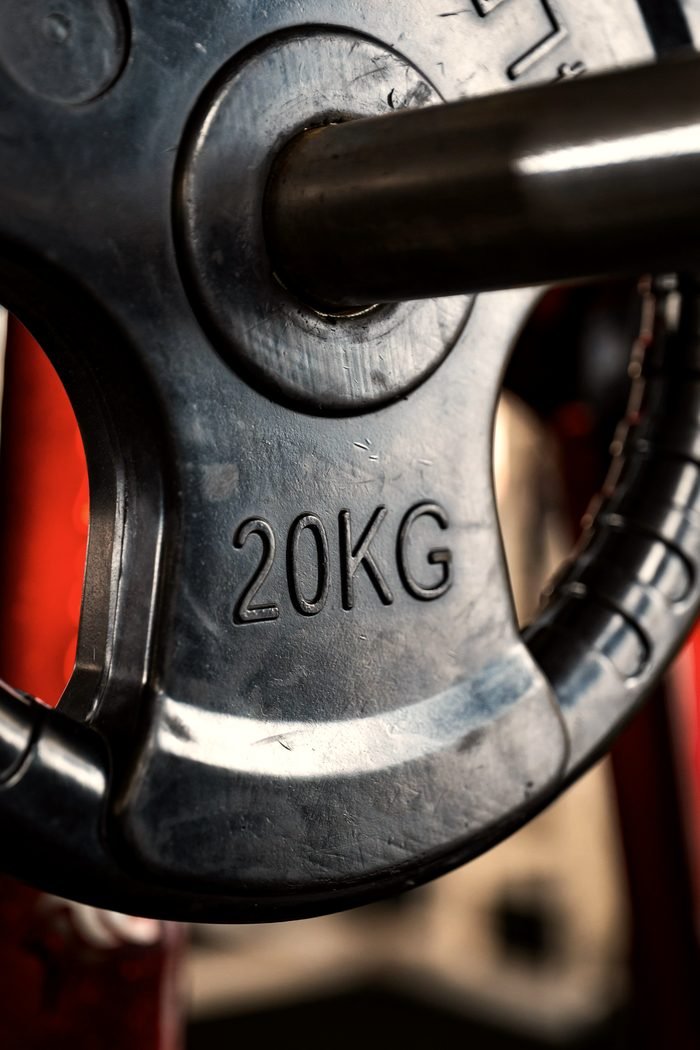
Enter the weight you want. You'll get the plates per side from what your gym actually has, plus a warm-up that builds to that weight, with the plates for each set.
- free, in kg or lb
- only the plates your gym has
- plates for every warm-up set
Load the bar, then warm up to it
Plates per side from what your gym actually has, plus a warm-up to this weight with the plates for every step.
Load the bar without doing the math
To load the bar, subtract the bar's weight, split what's left in half and put that on each side, heaviest plates first. 315 lb on a 45 lb bar is 135 lb a side: three 45s. It's easy until your gym runs out of 45s or the bar isn't a standard one. Tell the calculator which plates you have, and it builds your weight from as few plates as possible.
Handy when
- Your gym has an odd mix of plates.
- You use a 15 kg or 10 kg bar.
- You switch between kilos and pounds.
- You want the plates for your whole warm-up worked out before your first set.
Skip it when
- You train with dumbbells or machines.
- It's a weighted pull-up or dip. The belt calculator counts your bodyweight.
- You want percentages of your max. The 1RM calculator does that.
What to expect
- Fewest plates first. The calculator picks the combination with the fewest plates, so you load and unload faster.
- Missing plates? No problem. Switch off what your gym doesn't have, and the calculator works around it.
- Odd weights get two options. If a weight can't be loaded exactly, you see the closest loads on either side, one lighter and one heavier.
- The warm-up fits the plan. Pick what you're warming up for, and the ramp adjusts. You get more steps before a max single and fewer before light sets.
Plate colors
Competition plates are color-coded by weight, and the calculator uses the same colors.
- 25 kg Red
- 20 kg Blue
- 15 kg Yellow
- 10 kg Green
Loading tips
- Heaviest plates go on first. Load from biggest to smallest, in the order the calculator lists them.
- Same on both sides. Each list is for one side. Load the other side the same way.
- Use collars. Plates creep on heavy sets, especially when the bar moves fast.
- Count the collars at a meet. Competition collars weigh 2.5 kg each, so a 20 kg bar with collars is 25 kg.
- Warm up in big jumps. Warm-up weights go in 5 kg or 10 lb steps. Small plates only slow you down there.
- Save the link. The Copy link button saves your bar and plates, so next time the calculator opens already set up.

How the calculator works
It subtracts the bar from your target and splits the rest between the two sides. Then it checks every combination of the plates you've switched on and picks the one with the fewest plates. If two combinations tie, the one with heavier plates wins. If nothing hits the weight exactly, it shows the closest loads below and above.
Warm-up
It uses the same steps as the warm-up in the Strenos 1RM calculator, but the percentages are of your target instead of your max. Before heavy sets of 3 to 5 it goes 20% for 10, 50% for 8, 70% for 5, 85% for 3 and 95% for 1. Weights round to 5 kg or 10 lb steps and never drop below the bar. Any step that isn't lighter than your target gets dropped.
Read next
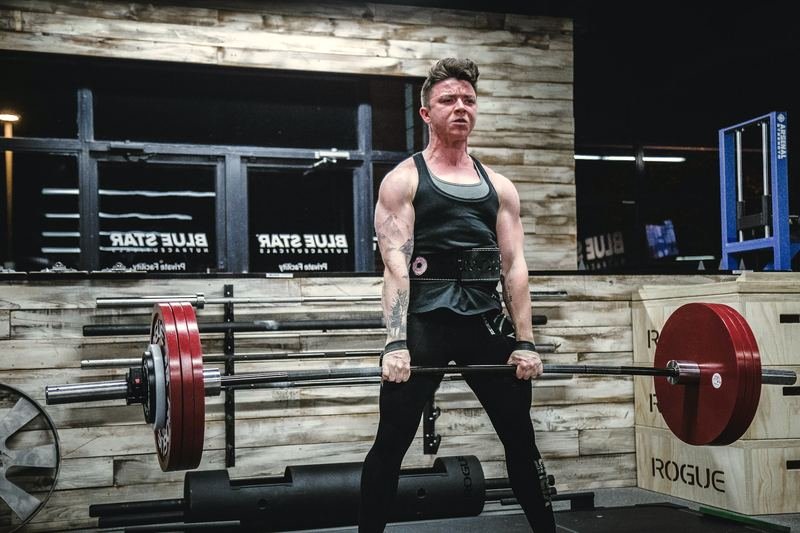 6 min readBBB vs FSL: which 5/3/1 supplemental template to runBBB is 5x10 at 50–60% of your working max and builds size. FSL is 5x5 at your first-set weight and builds strength. Here's how to choose.
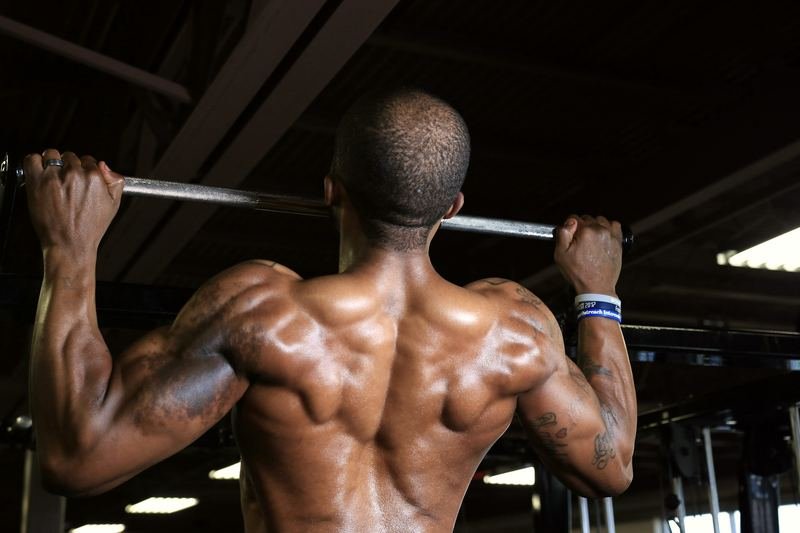 7 min readWeighted pull-up percentages: how to count your bodyweight85% of your belt weight on a pull-up is closer to 95% of your real max. Here's how to work out weighted pull-up and dip percentages with your bodyweight counted.
Then never do plate math again
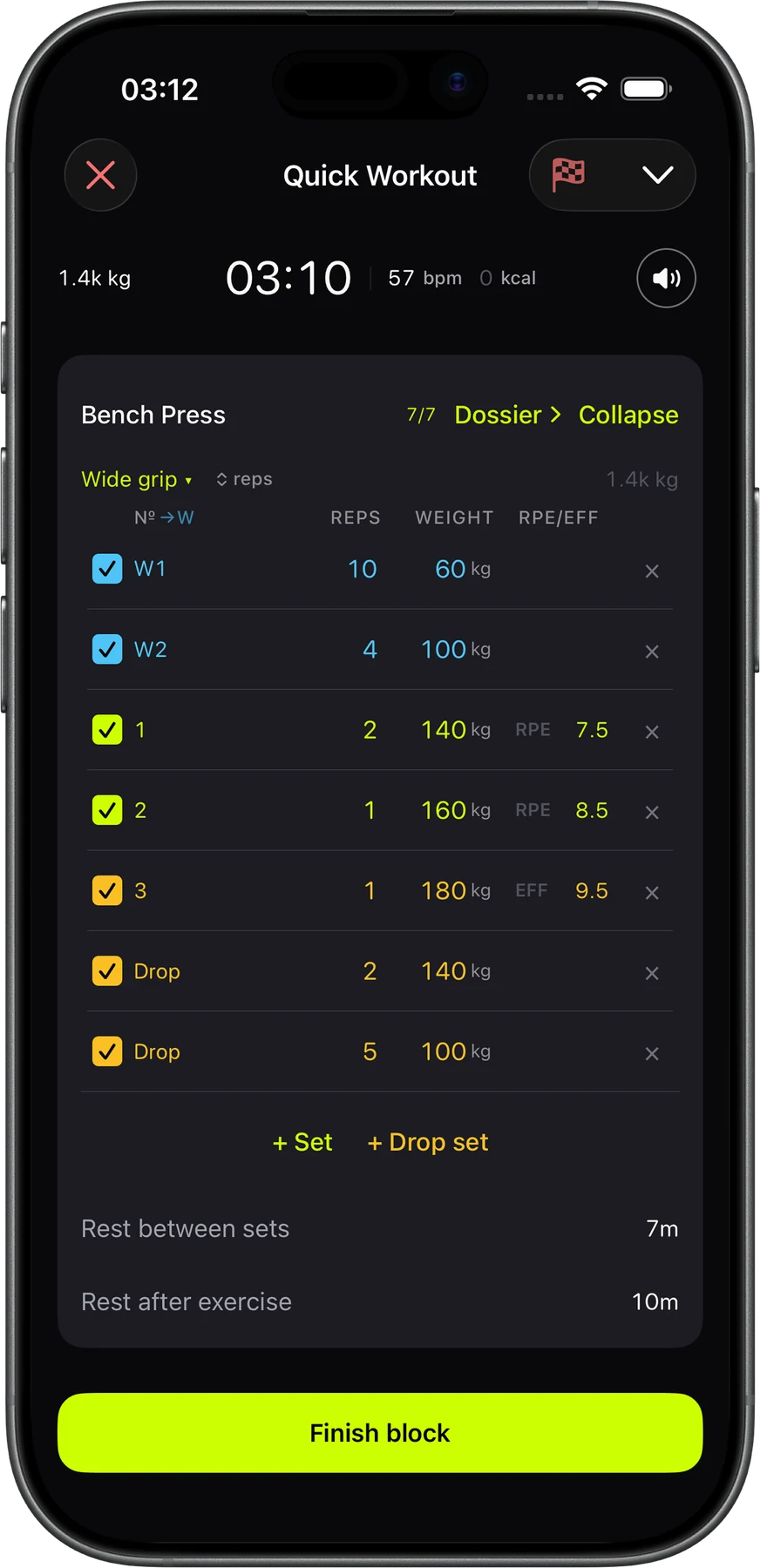
Strenos rounds every weight to the smallest plate in your gym, in kg or lb, so you can load every set it gives you. Warm-ups from the 1RM calculator go into your workout in one tap.
- Weights rounded to your gym's plates
- kg or lb, switch anytime
- The rest timer starts on its own
Free on the App Store, in kg or lb.

On a computer? Point your iPhone camera at the code to open Strenos in the App Store.
Common questions
How do I work out plates per side?
Subtract the bar from the total and divide by two. 140 kg on a 20 kg bar is 60 kg per side: 25, 25 and 10.
Which bar weight should I pick?
A standard men's Olympic bar is 20 kg or 45 lb. Women's bars are 15 kg, and technique bars are often 10 kg. Not sure? Ask at your gym or weigh the bar.
Why can't it hit my exact weight?
Your plates can't make that weight. Switch on smaller plates if your gym has them, or take the closest weight the calculator offers.
Does it work in pounds?
Yes, with 45 and 35 lb bars and plates from 45 down to 1.25 lb.
Can I print the warm-up?
Yes. The Print button puts the whole warm-up on one page, with the plates for each set.

Your next set is already worked out.
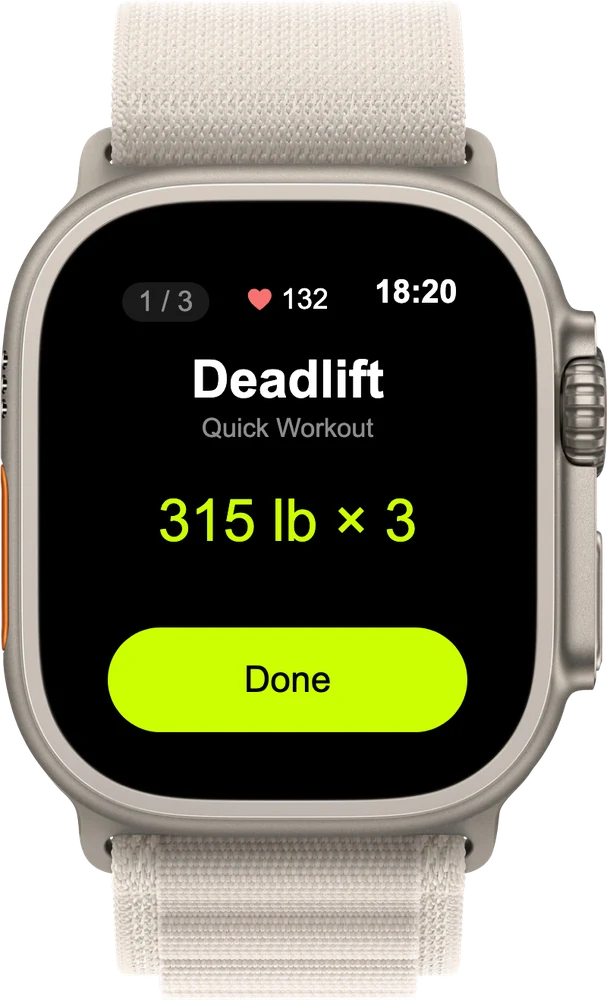
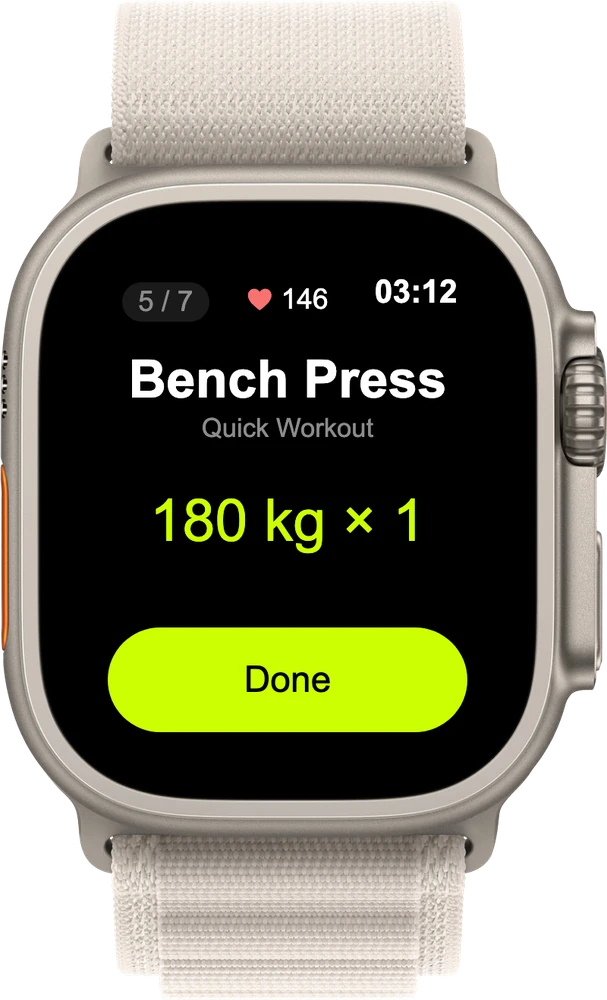
Strenos runs five programs on iPhone and Apple Watch. You log sets on your wrist, and the weights are ready before you chalk up.
Free on the App Store.