 strenos
What rank are you? Streetlifting standards by federation.
Enter your bodyweight and your best weighted pull-up, dip or total. You get your rank by the official ISF tables, how far the next rank is, and the weight classes and rules of ISF, WSF, FinalRep, USA Streetlifting and WSWCF.
- official ISF and IPAF tables, with the retrieval date
- kg or lb, pull-ups, dips and the total
- honest: only a meet awards the rank

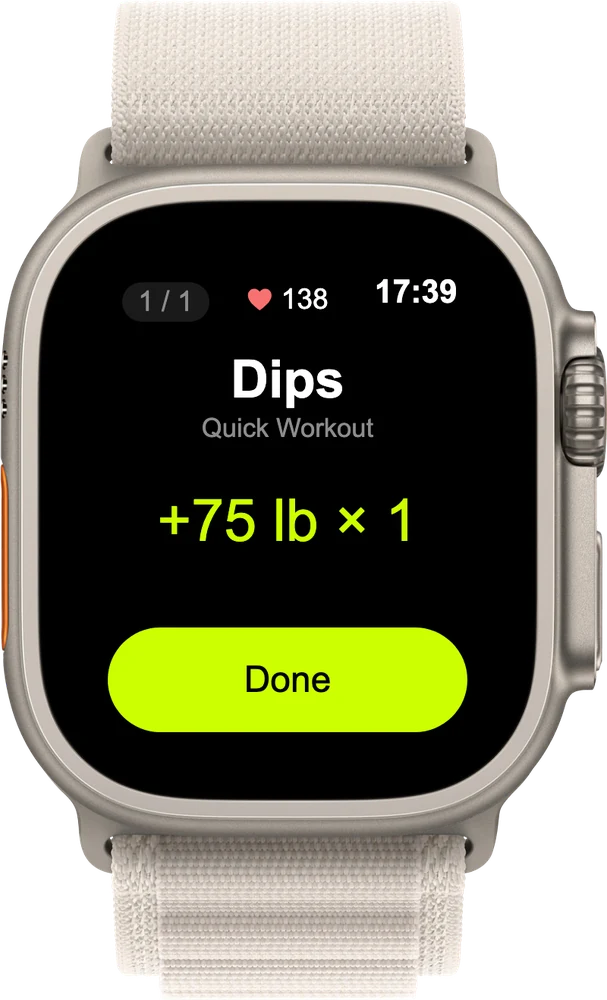
Your rank and how far the next one is
Enter your bodyweight and result. Below: your rank by the federation table, every threshold in your weight class and the full tables.
ISF: Weighted pull-up
| Bodyweight | Elite | MSIC | MS | CMS | Rank 1 | Rank 2 | Rank 3 | Youth 1 | Youth 2 | Youth 3 |
|---|---|---|---|---|---|---|---|---|---|---|
| 52 kg | – | – | 52.5 | 40 | 35 | 25 | 20 | 15 | 12.5 | 10 |
| 56 kg | 82.5 | 70 | 62.5 | 50 | 45 | 35 | 27.5 | 22.5 | 17.5 | 12.5 |
| 60 kg | 87.5 | 72.5 | 65 | 55 | 52.5 | 45 | 35 | 25 | 20 | 15 |
| 67.5 kg | 91.25 | 77.5 | 67.5 | 60 | 55 | 47.5 | 37.5 | 27.5 | 22.5 | 17.5 |
| 75 kg | 95 | 82.5 | 72.5 | 65 | 57.5 | 51.25 | 40 | 30 | 25 | 20 |
| 82.5 kg | 98.75 | 85 | 75 | 67.5 | 60 | 53.75 | 38.75 | 31.25 | 23.75 | 17.5 |
| 90 kg | 100 | 90 | 80 | 70 | 62.5 | 55 | 37.5 | 27.5 | 21.25 | 15 |
| 90+ kg | 101.25 | 92.5 | 82.5 | 75 | 65 | 53.75 | 35 | 25 | 20 | 12.5 |
| Bodyweight | Elite | MSIC | MS | CMS | Rank 1 | Rank 2 | Rank 3 | Youth 1 | Youth 2 | Youth 3 |
|---|---|---|---|---|---|---|---|---|---|---|
| 44 kg | – | – | 18.75 | 15 | 12.5 | 10 | 7.5 | 5 | – | – |
| 48 kg | 32.5 | 25 | 20 | 17.5 | 15 | 12.5 | 10 | 7.5 | – | – |
| 52 kg | 35 | 27.5 | 22.5 | 20 | 17.5 | 15 | 12.5 | 10 | 5 | – |
| 56 kg | 40 | 32.5 | 25 | 22.5 | 20 | 17.5 | 15 | 12.5 | 7.5 | – |
| 56+ kg | 41.25 | 35 | 27.5 | 25 | 22.5 | 20 | 17.5 | 15 | 10 | – |
Source: International Streetlifting Federation, retrieved 2026-11-09, federation update 2026-01-31. The federation marks the tables as a test version.
ISF: Weighted dip
| Bodyweight | Elite | MSIC | MS | CMS | Rank 1 | Rank 2 | Rank 3 | Youth 1 | Youth 2 | Youth 3 |
|---|---|---|---|---|---|---|---|---|---|---|
| 52 kg | – | – | 62.5 | 57.5 | 50 | 40 | 30 | 22.5 | 17.5 | 15 |
| 56 kg | 105 | 85 | 72.5 | 62.5 | 55 | 45 | 35 | 25 | 20 | 17.5 |
| 60 kg | 120 | 102.5 | 85 | 75 | 65 | 50 | 40 | 30 | 25 | 20 |
| 67.5 kg | 130 | 112.5 | 100 | 85 | 75 | 55 | 45 | 35 | 30 | 25 |
| 75 kg | 140 | 117.5 | 105 | 90 | 80 | 60 | 50 | 40 | 35 | 30 |
| 82.5 kg | 147.5 | 122.5 | 110 | 95 | 85 | 65 | 55 | 45 | 40 | 32.5 |
| 90 kg | 150 | 127.5 | 115 | 100 | 90 | 72.5 | 60 | 42.5 | 42.5 | 30 |
| 90+ kg | 152.5 | 135 | 120 | 102.5 | 95 | 77.5 | 65 | 40 | 37.5 | 25 |
| Bodyweight | Elite | MSIC | MS | CMS | Rank 1 | Rank 2 | Rank 3 | Youth 1 | Youth 2 | Youth 3 |
|---|---|---|---|---|---|---|---|---|---|---|
| 44 kg | – | – | 27.5 | 22.5 | 20 | 17.5 | 15 | 12.5 | 10 | 7.5 |
| 48 kg | 42.5 | 37.5 | 31.25 | 26.25 | 23.75 | 21.25 | 17.5 | 15 | 12.5 | 10 |
| 52 kg | 45 | 40 | 35 | 30 | 27.5 | 25 | 22.5 | 17.5 | 15 | 12.5 |
| 56 kg | 47.5 | 42.5 | 37.5 | 32.5 | 30 | 27.5 | 25 | 16.25 | 12.5 | 10 |
| 56+ kg | 50 | 45 | 40 | 35 | 32.5 | 30 | 23.75 | 15 | 10 | 7.5 |
Source: International Streetlifting Federation, retrieved 2026-11-09, federation update 2026-01-31. The federation marks the tables as a test version.
ISF: Classic total (pull-up + dip)
| Bodyweight | Elite | MSIC | MS | CMS | Rank 1 | Rank 2 | Rank 3 | Youth 1 | Youth 2 | Youth 3 |
|---|---|---|---|---|---|---|---|---|---|---|
| 52 kg | – | – | 115 | 97.5 | 80 | 65 | 50 | 37.5 | 30 | 25 |
| 56 kg | 175 | 160 | 127.5 | 112.5 | 97.5 | 82.5 | 65 | 47.5 | 35 | 30 |
| 60 kg | 190 | 170 | 137.5 | 122.5 | 105 | 90 | 72.5 | 55 | 45 | 35 |
| 67.5 kg | 205 | 180 | 152.5 | 135 | 112.5 | 97.5 | 80 | 62.5 | 52.5 | 42.5 |
| 75 kg | 215 | 190 | 165 | 145 | 122.5 | 105 | 90 | 70 | 60 | 50 |
| 82.5 kg | 222.5 | 200 | 175 | 150 | 130 | 110 | 85 | 65 | 50 | 42.5 |
| 90 kg | 230 | 210 | 185 | 160 | 135 | 115 | 82.5 | 55 | 42.5 | 35 |
| 90+ kg | 235 | 217.5 | 195 | 165 | 140 | 120 | 80 | 50 | 35 | 30 |
| Bodyweight | Elite | MSIC | MS | CMS | Rank 1 | Rank 2 | Rank 3 | Youth 1 | Youth 2 | Youth 3 |
|---|---|---|---|---|---|---|---|---|---|---|
| 44 kg | – | – | 45 | 37.5 | 32.5 | 27.5 | 25 | 17.5 | 15 | 12.5 |
| 48 kg | 77.5 | 62.5 | 52.5 | 42.5 | 37.5 | 32.5 | 30 | 22.5 | 20 | 15 |
| 52 kg | 87.5 | 72.5 | 57.5 | 47.5 | 45 | 37.5 | 32.5 | 27.5 | 22.5 | 17.5 |
| 56 kg | 95 | 77.5 | 67.5 | 52.5 | 50 | 42.5 | 37.5 | 25 | 20 | 15 |
| 56+ kg | 97.5 | 82.5 | 72.5 | 55 | 52.5 | 45 | 35 | 22.5 | 17.5 | 12.5 |
Source: International Streetlifting Federation, retrieved 2026-11-09, federation update 2026-01-31. The federation marks the tables as a test version.
ISF: Multirep total (reps with a kettlebell)
Kettlebells 8 and 12 kgGirls 13–17, junior women 18–22 and veteran women
| Bodyweight | MS | CMS | Rank 1 | Rank 2 | Rank 3 | Youth 1 | Youth 2 | Youth 3 |
|---|---|---|---|---|---|---|---|---|
| 44 kg | 20 | 16 | 14 | 11 | 9 | 7 | 5 | – |
| 48 kg | 22 | 18 | 16 | 13 | 11 | 9 | 7 | – |
| 52 kg | 24 | 20 | 18 | 15 | 13 | 10 | 8 | – |
| 56 kg | 23 | 19 | 17 | 14 | 12 | 9 | 6 | – |
| 60 kg | 21 | 16 | 14 | 11 | 8 | 5 | – | – |
| 60+ kg | 18 | 12 | 10 | 7 | 4 | – | – | – |
Kettlebells 12 and 16 kgWomen, open age category
| Bodyweight | MSIC | MS | CMS | Rank 1 | Rank 2 | Rank 3 |
|---|---|---|---|---|---|---|
| 44 kg | 37 | 26 | 20 | 16 | 13 | 10 |
| 48 kg | 40 | 29 | 22 | 19 | 15 | 12 |
| 52 kg | 44 | 31 | 24 | 20 | 17 | 14 |
| 56 kg | 46 | 33 | 26 | 22 | 17 | 14 |
| 60 kg | 39 | 27 | 20 | 16 | 13 | 10 |
| 60+ kg | 33 | 21 | 16 | 12 | 9 | – |
Kettlebells 8 and 16 kgBoys 13–17
| Bodyweight | CMS | Rank 1 | Rank 2 | Rank 3 | Youth 1 | Youth 2 | Youth 3 |
|---|---|---|---|---|---|---|---|
| 52 kg | 33 | 23 | 18 | 15 | 11 | 8 | 5 |
| 56 kg | 36 | 28 | 23 | 20 | 15 | 11 | 8 |
| 60 kg | 42 | 33 | 28 | 25 | 21 | 16 | 12 |
| 67.5 kg | 45 | 37 | 31 | 28 | 24 | 19 | 16 |
| 75 kg | 48 | 41 | 36 | 33 | 28 | 23 | 19 |
| 82.5 kg | 44 | 38 | 32 | 28 | 22 | 18 | 14 |
| 90 kg | 38 | 32 | 27 | 24 | 18 | 14 | 11 |
| 100 kg | 30 | 25 | 21 | 17 | 13 | 9 | – |
| 100+ kg | 23 | 19 | 15 | 11 | 8 | – | – |
Kettlebells 16 and 24 kgJunior men 18–22 and veteran men
| Bodyweight | Elite | MSIC | MS | CMS | Rank 1 | Rank 2 | Rank 3 | Youth 1 | Youth 2 | Youth 3 |
|---|---|---|---|---|---|---|---|---|---|---|
| 52 kg | – | – | 38 | 31 | 23 | 18 | 14 | 10 | 8 | 5 |
| 56 kg | – | – | 41 | 35 | 25 | 20 | 17 | 13 | 11 | 8 |
| 60 kg | – | – | 43 | 37 | 29 | 24 | 21 | 17 | 14 | 11 |
| 67.5 kg | – | – | 50 | 42 | 33 | 28 | 24 | 21 | 17 | 14 |
| 75 kg | – | – | 56 | 46 | 36 | 31 | 27 | 24 | 20 | 17 |
| 82.5 kg | – | – | 51 | 41 | 33 | 27 | 23 | 22 | 18 | 14 |
| 90 kg | – | – | 46 | 38 | 30 | 23 | 19 | 16 | 13 | 10 |
| 100 kg | – | – | 41 | 30 | 24 | 19 | 15 | 11 | 8 | 6 |
| 110 kg | – | – | 33 | 23 | 19 | 15 | 11 | – | – | – |
| 110+ kg | – | – | 29 | 18 | 15 | 10 | – | – | – | – |
Kettlebells 24 and 32 kgMen, open age category, amateur kettlebells
| Bodyweight | Elite | MSIC | MS | CMS | Rank 1 | Rank 2 | Rank 3 |
|---|---|---|---|---|---|---|---|
| 52 kg | – | 41 | 32 | 25 | 18 | 15 | 12 |
| 56 kg | – | 45 | 35 | 27 | 20 | 17 | 14 |
| 60 kg | – | 50 | 37 | 29 | 22 | 19 | 16 |
| 67.5 kg | – | 55 | 41 | 33 | 25 | 22 | 19 |
| 75 kg | – | 60 | 47 | 36 | 28 | 25 | 22 |
| 82.5 kg | – | 64 | 50 | 40 | 31 | 28 | 25 |
| 90 kg | – | 59 | 47 | 36 | 29 | 26 | 23 |
| 100 kg | – | 51 | 42 | 33 | 25 | 20 | 19 |
| 110 kg | – | 45 | 34 | 24 | 16 | 13 | 10 |
| 110+ kg | – | 35 | 27 | 18 | 11 | 8 | 5 |
Kettlebells 32 and 48 kgMen, open age category, pro kettlebells
| Bodyweight | Elite | MSIC | MS | CMS | Rank 1 | Rank 2 | Rank 3 |
|---|---|---|---|---|---|---|---|
| 52 kg | 38 | 32 | 24 | 18 | 14 | 11 | 8 |
| 56 kg | 41 | 35 | 26 | 20 | 16 | 13 | 10 |
| 60 kg | 45 | 38 | 29 | 24 | 19 | 16 | 13 |
| 67.5 kg | 51 | 43 | 33 | 28 | 22 | 19 | 16 |
| 75 kg | 53 | 45 | 35 | 30 | 25 | 21 | 18 |
| 82.5 kg | 55 | 47 | 37 | 32 | 27 | 23 | 17 |
| 90 kg | 51 | 43 | 33 | 27 | 24 | 19 | 15 |
| 100 kg | 46 | 38 | 28 | 21 | 20 | 16 | 13 |
| 110 kg | 38 | 30 | 22 | 17 | 15 | 11 | 8 |
| 110+ kg | 30 | 23 | 16 | 13 | 10 | 7 | 5 |
Source: International Streetlifting Federation, retrieved 2026-11-09, federation update 2026-01-31. The federation marks the tables as a test version.
IPAF Kazakhstan
Weighted pull-up
| Bodyweight | Elite | MSIC | MS | CMS |
|---|---|---|---|---|
| 56 kg | 82.5 | 70 | 62.5 | 50 |
| 60 kg | 87.5 | 72.5 | 65 | 55 |
| 67.5 kg | 91.25 | 77.5 | 67.5 | 60 |
| 75 kg | 95 | 82.5 | 72.5 | 65 |
| 82.5 kg | 98.75 | 85 | 75 | 67.5 |
| 90 kg | 100 | 90 | 80 | 70 |
| 90+ kg | 101.25 | 92.5 | 82.5 | 75 |
| Bodyweight | Elite | MSIC | MS | CMS |
|---|---|---|---|---|
| 44 kg | – | – | 18.75 | 15 |
| 48 kg | 32.5 | 25 | 20 | 17.5 |
| 52 kg | 35 | 27.5 | 22.5 | 20 |
| 56 kg | 40 | 32.5 | 25 | 22.5 |
| 56+ kg | 41.25 | 35 | 27.5 | 25 |
Source: IPAF Kazakhstan, retrieved 2026-11-09. The page shows no revision date.
Weighted dip
| Bodyweight | Elite | MSIC | MS | CMS |
|---|---|---|---|---|
| 56 kg | 105 | 85 | 72.5 | 62.5 |
| 60 kg | 120 | 102.5 | 85 | 75 |
| 67.5 kg | 130 | 112.5 | 100 | 85 |
| 75 kg | 140 | 117.5 | 105 | 90 |
| 82.5 kg | 147.5 | 122.5 | 110 | 95 |
| 90 kg | 150 | 127.5 | 115 | 100 |
| 100 kg | 152.5 | 135 | 120 | 102.5 |
| 100+ kg | 155 | 140 | 125 | 107.5 |
| Bodyweight | Elite | MSIC | MS | CMS |
|---|---|---|---|---|
| 44 kg | – | – | 27.5 | 22.5 |
| 48 kg | 42.5 | 37.5 | 31.25 | 26.5 |
| 52 kg | 45 | 40 | 35 | 30 |
| 56 kg | 47.5 | 42.5 | 37.5 | 32.5 |
| 56+ kg | 50 | 45 | 40 | 35 |
Source: IPAF Kazakhstan, retrieved 2026-11-09. The page shows no revision date.
How ISF awards a rank
The table above tells you which level your result reaches. The rank itself you earn only at an ISF meet: weigh-in, three attempts, certified judges and a protocol. Here is what counts and what does not, by ISF rules v5.2 dated 1 October 2026.
Your result counts if
- You lifted at a meet run by ISF or its national representative, with judges certified by the federation.
- Two of the three judges, the center judge and the side judges, passed the attempt.
- The pull-up started from a full dead hang with straight arms and your chin cleared the bar.
- On dips your shoulder went below or level with the elbow, and you locked out fully at the top until the "Finish!" command.
- The weight was declared in 1.25 kg steps and taken within one minute of being called.
Your result does not count if
- You did it in the gym on video, with no judges and no protocol. That is a benchmark for the table, not a rank.
- There was a jerk, a swing, a kick or a double movement.
- You used a mixed or a false grip. Only pronated and supinated grips are allowed.
- You started down before "Start!" or did not wait for "Finish!".
- You wore gloves, grips, liquid chalk or stiff compression gear. The load hung on a chain, cable or band: only a non-stretch strap is allowed.
What else matters in the ISF rules
- Disciplines. Classic: pull-up, dip and the total for max weight. Multirep: the same lifts for reps with a kettlebell inside two minutes. Weighted calisthenics: muscle-up, pull-up, dip and squat.
- Attempts. Three per lift, the best one counts, and Classic allows a fourth, record attempt. One minute per attempt, steps of 1.25 kg or more.
- Classes and age. Men from 52 to 110+ kg, women from 44 to 67.5+ kg under rules v5.2. Youth 13–17, juniors 18–22, veterans from 40. The rank tables are still on the older grid, and the calculator follows the tables.
- Divisions. Amateur with doping control, Pro without it, Adaptive for athletes with health limitations. Before the meet you sign an anti-doping declaration under the WADA Code.
How a meet goes
- Entry and weigh-in. You register in advance, weigh in on the day and land in your class. The belt and hardware come from the organizer by default.
- Opener. Declare a weight you will make for sure. It is your insurance: without a good attempt in a lift you drop out of the total.
- Second and third. Add 1.25 kg or more. If you do not declare, the bar goes up 1.25 kg on its own after a good attempt.
- Judging. The center judge gives the commands by voice and hand: "Start!", "Finish!". Decisions are by majority, 2 of 3.
- Protocol and rank. Your result goes into the meet protocol, and the federation awards the rank from it. Regional meets usually award up to CMS or MS.
Streetlifting standards: who sets them
There is no government body behind streetlifting ranks. In Russia and Kazakhstan the sport is not in the official registry, so CMS, MS and MSIC in streetlifting are federation titles, recognized at that federation's meets.
Two federations publish rank tables openly: ISF (International Streetlifting Federation) and IPAF in Kazakhstan, whose tables copy ISF. WSF has tables too, but keeps them in closed files. The Western federations, FinalRep, USA Streetlifting and WSWCF, have no ranks at all: you compete in weight classes and chase records. This page covers both worlds: tables with a calculator where they exist, and rules with weight classes for everyone else.
Most "weighted pull-up standards" pages online are modeled estimates from workout apps, not competition standards. Everything here comes from a federation document, with the link and the date we read it. The ISF tables were marked as a test version on that date, and we say so.
The federations and their rules
ISF. The only rank system with open tables
The International Streetlifting Federation has been around since 2016. Its site lists 24 countries, from full national federations in Kazakhstan, the Netherlands, Russia and Slovenia to offices in development. The 2026 World Championship is in Oral, Kazakhstan, on 28 November.
Ranks run from Youth 3 to Elite, separately for every discipline: pull-up, dip, the total, the multirep total with kettlebells, muscle-up and squat. Rules v5.2 are dated 1 October 2026: judging 2 of 3, 1.25 kg steps. The federation is explicit that hitting a number does not award a rank on its own. You need the meet.
WSF. The WRPF family
The World Streetlifting Federation belongs to the WRPF group, and its documents sit on the WRPF site. Disciplines: the total, pull-ups and dips for max, multirep pull-ups, dips and total, and the muscle-up. There is a drug-tested division with its own prohibited list.
WSF rank tables are published in OneDrive folders that do not open without a Microsoft account. That is why there are no WSF numbers on this page: we did not copy them from third-party sites, where a 2019 revision is still going around. If you need a WSF rank, open the standards section on the federation site and download the current file.
IPAF Kazakhstan. ISF tables plus heavier classes
IPAF publishes pull-up and dip standards for four titles: Elite, MSIC, MS and CMS. The numbers match ISF, but the dip table adds 100 and 100+ kg classes. Age groups are its own: youth 14–17, juniors 18–23, men 24–39, veterans from 40. IPAF is a separate switch in the calculator.
FinalRep. Four lifts and a world series without ranks
FinalRep is a private non-profit that built the biggest Western competition series: EUROS, AMERICS, ASIAS and WORLDS, 16 meets on four continents. There are no ranks. You compete in four lifts: muscle-up, pull-up, dip and squat, three attempts each, the best one goes into the total, and the biggest total wins.
Women lift at 52, 57, 63, 70 and 70+ kg, men at 66, 73, 80, 87, 94, 101 and 101+ kg. Steps are 1.25 kg, 2.5 kg in the squat. RAW only, weight belts are licensed, a squat belt is allowed. To compare across classes they use RIS, a relative index against bodyweight; the formula is not published. Doping tests are run by an independent agency against the WADA list, both in and out of season, and FSL membership is required for EUROS and WORLDS. Since January 2026 a working group of 10 people from 8 countries has been building a World Streetlifting Federation (WSLF) on top of FinalRep.
USA Streetlifting. American rules compatible with FinalRep
Rulebook v7 is dated 10 February 2026. Two formats: Classic (pull and dip) and All4 (bar or ring muscle-up, pull, dip, back squat). Weight classes match FinalRep, steps are 1.25 kg, 2.5 kg in the squat. The squat bar with collars weighs 25 kg and the squat belt follows IPF RAW dimensions. Minimum age is 13, and the national championship is open to US citizens and residents. No ranks.
WSWCF. Strength as reps at a fixed load
The World Street Workout and Calisthenics Federation in Riga runs world championships in freestyle, power and endurance. In Power you do not lift a max, you do reps: men pull up with 30 kg and dip with 50 kg, women with 10 and 15 kg, then everyone does strict bodyweight muscle-ups. The score is the sum of reps, no dead stops, and the belt weighs no more than a kilo. Men compete under 80, over 80 and over 90 kg, women in one absolute class. The rules were approved on 17 June 2026, and the 2026 World Championship ran in Riga on 13–15 August. No ranks.
Same lift, different rules
A pull-up is a pull-up everywhere, but each federation judges and scores it differently. A result from one meet does not transfer to another federation's table.
| Federation | Ranks | What is scored | Weight step | Doping |
|---|---|---|---|---|
| ISF | Yes, open tables | Max in the pull-up, dip, muscle-up and squat; multirep with a kettlebell | 1.25 kg, squat 2.5 | Amateur tested, Pro untested |
| IPAF | Yes, open tables | Max in the pull-up and dip | Not stated | Not stated |
| WSF | Yes, closed files | Max and reps, muscle-up | Not stated | Tested division |
| FinalRep | No | Total: muscle-up, pull-up, dip, squat | 1.25 kg, squat 2.5 | Testing pool for all athletes |
| USA Streetlifting | No | Two-lift total, or four in All4 | 1.25 kg, squat 2.5 | Not stated |
| WSWCF | No | Reps at a fixed load plus muscle-ups | Fixed load | Not stated |
If you are prepping for a specific meet, read that federation's rulebook: dip depth, the pause at the top, grip and gear all differ, and attempts get turned down for small things.
How Strenos gets you to the rank
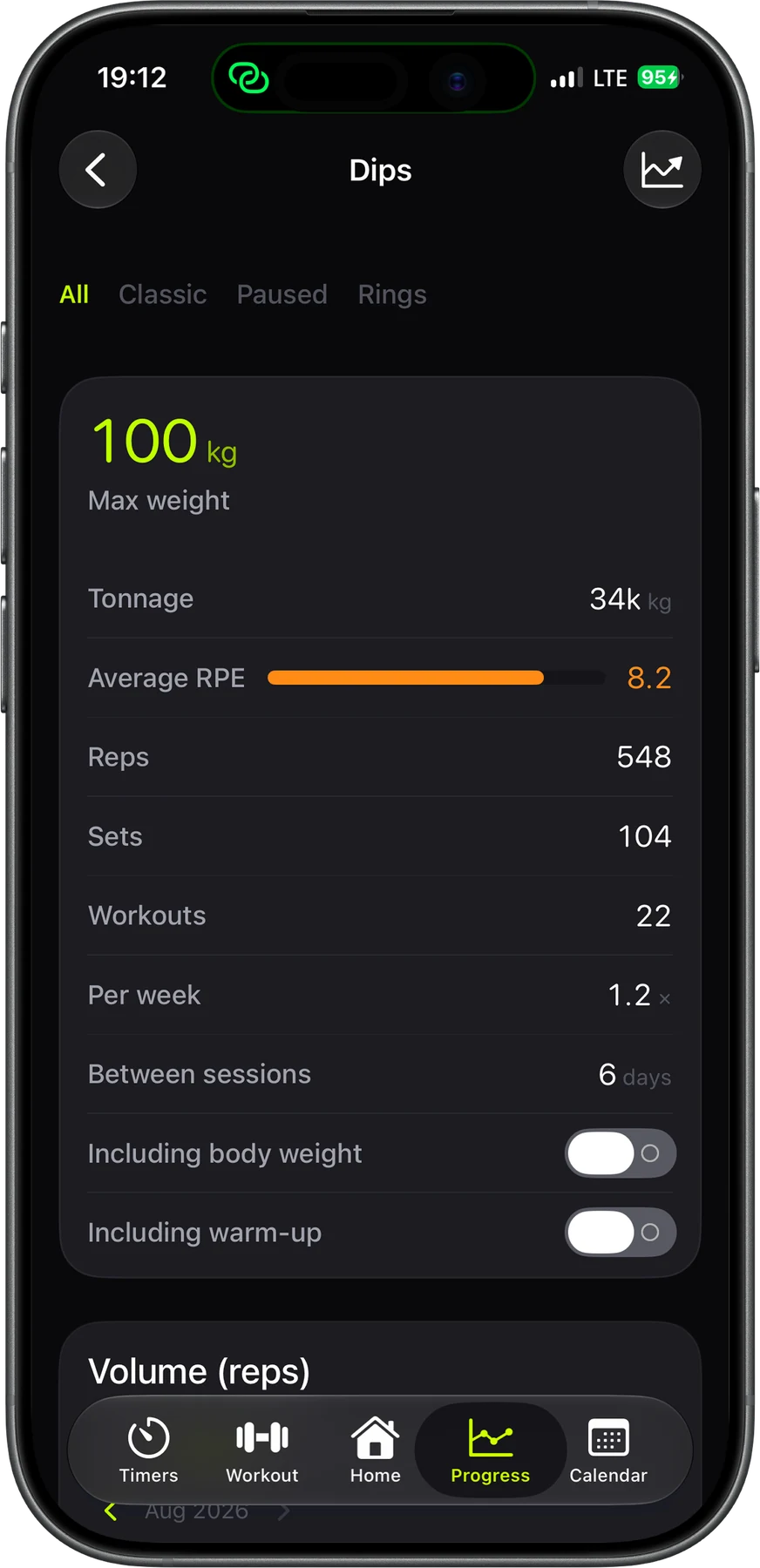
The meet awards the rank, the program gets you there. In Strenos you run 5/3/1, nSuns, GZCLP or the Texas Method on weighted pull-ups and dips. Percentages come from your full load, bodyweight plus the added weight, so 85% feels like 85% and not like a max attempt.
The belt goes up one small plate at a time, half the barbell step. Warm-ups start with a bodyweight set, then 20% and 40% of your belt max. After a plus set your watch asks for the reps and your estimated belt max updates by the streetlifting formula. Every PR stays in your log with a video, so by meet day you know exactly what opener to declare.
To check yourself without a max attempt, put your last heavy set into the weighted pull-up 1RM calculator and run that max against the table above.
Sources
- ISF: pull-up standards, dip standards, total and multirep. Retrieved 9 November 2026; federation update 31 January 2026, marked as a test version.
- ISF: rules v5.2 of 1 October 2026, FAQ. ISF World: countries, disciplines, World Championship 2026.
- IPAF Kazakhstan: pull-up standards and dip standards. Retrieved 9 November 2026.
- WSF: rank standards section and documents on the WRPF site. Files on OneDrive, checked 9 November 2026.
- FinalRep: about streetlifting, rulebook VI26.2, governance and the WSLF, doping test system.
- USA Streetlifting: rulebook v7, 10 February 2026.
- WSWCF: competition rules, Riga, 17 June 2026 and regulations with weight categories.
The numbers in the tables are copied without changes. When a federation updates a table, we update it here and change the retrieval date. Spotted a mismatch? Tell us.
Read next
7 min readStreetlifting for beginners: the lifts, the rules and your first monthsStreetlifting is a strength sport built on one-rep pull-ups and dips with weight on a belt. Here's what's contested, what counts as a rep and how to start. 7 min readWeighted pull-up percentages: how to count your bodyweight85% of your belt weight on a pull-up is closer to 95% of your real max. Here's how to work out weighted pull-up and dip percentages with your bodyweight counted.

A belt program is what gets you to the rank
In Strenos you run 5/3/1, nSuns, GZCLP or the Texas Method on weighted pull-ups and dips. Percentages count your bodyweight plus the added load, the belt goes up one plate at a time, and every PR stays in your log with a video.
- Percentages that count your bodyweight
- An estimated belt max after every set
- PRs with video and Apple Watch
Free on the App Store. Week one of every program is free.

On a computer? Point your iPhone camera at the code to open Strenos in the App Store.
Questions about the standards
Is a streetlifting rank an official sports title?
No. Streetlifting is not in the national sports registries of Russia or Kazakhstan, so there is no state classification for it. CMS, MS and MSIC in streetlifting are federation titles from ISF, WSF or IPAF. They are valid inside that federation and do not give you a government rank.
How much on the belt is CMS in the weighted pull-up?
By the ISF table, at a bodyweight of 75 kg CMS starts at +65 kg, at 82.5 kg at +67.5 kg, at 90 kg at +70 kg. On dips in the same classes it is 90, 95 and 100 kg. For women at 56 kg CMS in the pull-up starts at +22.5 kg. The full tables are above, and the calculator shows how far you are.
Does the belt itself count toward the weight?
The ISF tables list the added weight you hang. The belt and hardware come from the organizer by default, and the load hangs on a non-stretch strap. How the belt's own mass is treated at a given meet is something to ask the judges at weigh-in: the v5.2 FAQ does not spell it out.
Why do the ISF tables stop at 90+ while the rules go to 110+?
Rules v5.2 of 1 October 2026 added 100, 110 and 110+ kg classes for men and 60, 67.5 and 67.5+ for women. The rank tables were last updated on 31 January 2026 and are still marked as a test version on the old grid. The calculator follows the published tables: above 90 kg your row is "90+".
Do I need to be drug-tested to get a rank?
ISF has two main divisions: Amateur with doping control and Pro without it. Which titles each division awards is not in the public rules; the meet regulations decide. WSF has a separate tested division with its own prohibited list. FinalRep tests every athlete in its pool, but awards no ranks.
How is ISF different from WSF?
They are two separate federations with their own meets, judges and titles. ISF publishes its tables openly and runs international rules v5.2; WSF belongs to the WRPF family and keeps its tables in documents. A title from one does not carry over to the other.
How do I actually get the rank?
Find a federation meet in the calendar, register, weigh in and lift. Judges must be certified by the federation, and attempts pass by 2 of 3. Your result goes into the protocol, and the rank is awarded from it. Regional ISF meets usually award up to CMS or MS; higher titles come at major events.
What is RIS at FinalRep?
The Relative Streetlifting Index compares the weight lifted with the athlete's bodyweight so lifters from different classes can be compared. It is calculated at every FinalRep meet and sometimes gets its own podium. The formula is not published, so it is not on this page.
Does the calculator work in pounds?
Yes. Switch the units to lb, enter your bodyweight and result in pounds, and the calculator converts them to kilos and checks them against the table. The tables themselves stay in kilos, as the federations publish them.
What is multirep streetlifting?
An ISF discipline where, inside two minutes, you do max pull-ups and then max dips with a kettlebell on the belt. The kettlebell depends on your group: from 8 and 12 kg for girls to 32 and 48 kg for men in the pro class. The rank comes from the total reps; the tables are above in the ISF section.

5/3/1, nSuns, GZCLP, Texas and Smolov Jr on your wrist.
Every set comes with its weight, reps and plates per side, worked out from your maxes. You check sets off on your Apple Watch, and the program moves your weights by its own rules.
Free on the App Store.